A Universe Built by Hand.
At a dinner in Florence, a handbag designer heard a story she has been hearing for years: the factories are closing, and the hands that made Italian craft are running out. Tissa Fontaneda explains why she has chosen to stay small, and why she thinks that is the point.
Florence, in May. Tissa Fontaneda had rented a house and organised a dinner, and the table filled with people she had not expected to spend the evening with. Several were craftsmen, handbag makers among them. Over the meal they described a landscape she already knew from the inside: an entire district that once carried Italy's reputation for making things, thinning out one workshop at a time.
"They said to me that there are so many factories closing, one after another," she recalls. "What a shame. And that is Made in Italy. It is in decline."
The conversation that followed is the subject of this interview, and it ranges far beyond one dinner. Fontaneda is a designer who runs her own house, works with a small network of ateliers, and has made a deliberate choice not to chase scale. Her handbags are soft, colour-led and expensive, and she is candid that the price is not a marketing device. It is a reflection of the work involved, and of a supply chain that is shrinking around her.
There is a question that every craft business in Europe is now asking, and Fontaneda asks it with unusual directness. Where will the next generation of makers come from?
"There is a lot of pressure on the young people," she says. "They want to build their lives. Sometimes they think that if they work in craftsmanship, or in a factory, or as a modeller, it is not appealing, because they think they will not earn enough money. And it is not true. The modeller I work with earns a very good salary. We have to make it attractive, because it is an amazing job."
She is not speaking abstractly. Her concern is practical. She is worried that the people who can cut a handbag properly, who can stitch on a surface that does not sit flat and who understand how a leather behaves under the needle, are becoming rare. Cutting, she points out, takes years of experience, and digitisation has made it easy to imagine that the skill is no longer required. It is required. "To create something like this, this is a lot of training," she says. "And there are less and less people who can do it. It is a big problem for us."
Her answer to the problem is not nostalgia. It is a reframing. Artificial intelligence, she argues, will change which jobs are considered secure, and the trades will be among the most valued. "You can become a contractor, a plumber... but what about a craftsman, an artist," she says. "If we can use this moment in time to push human beings back to using their hands, it is so important."
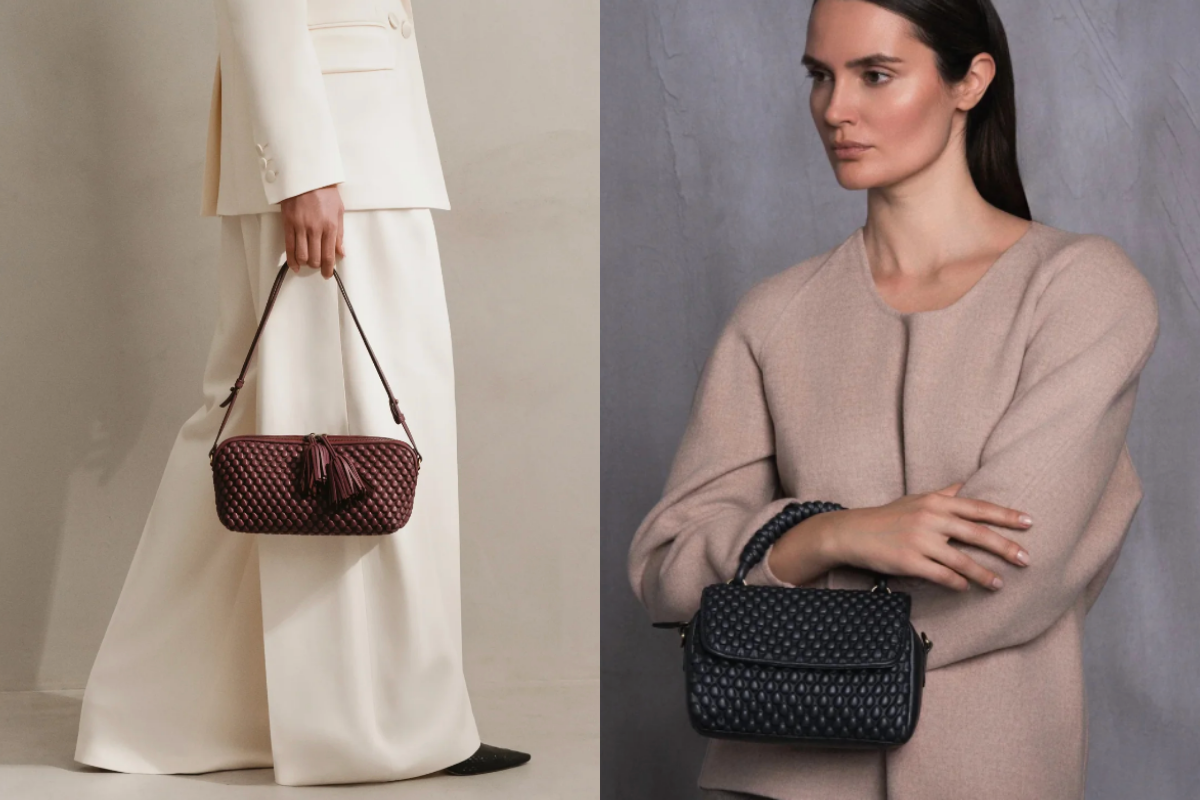
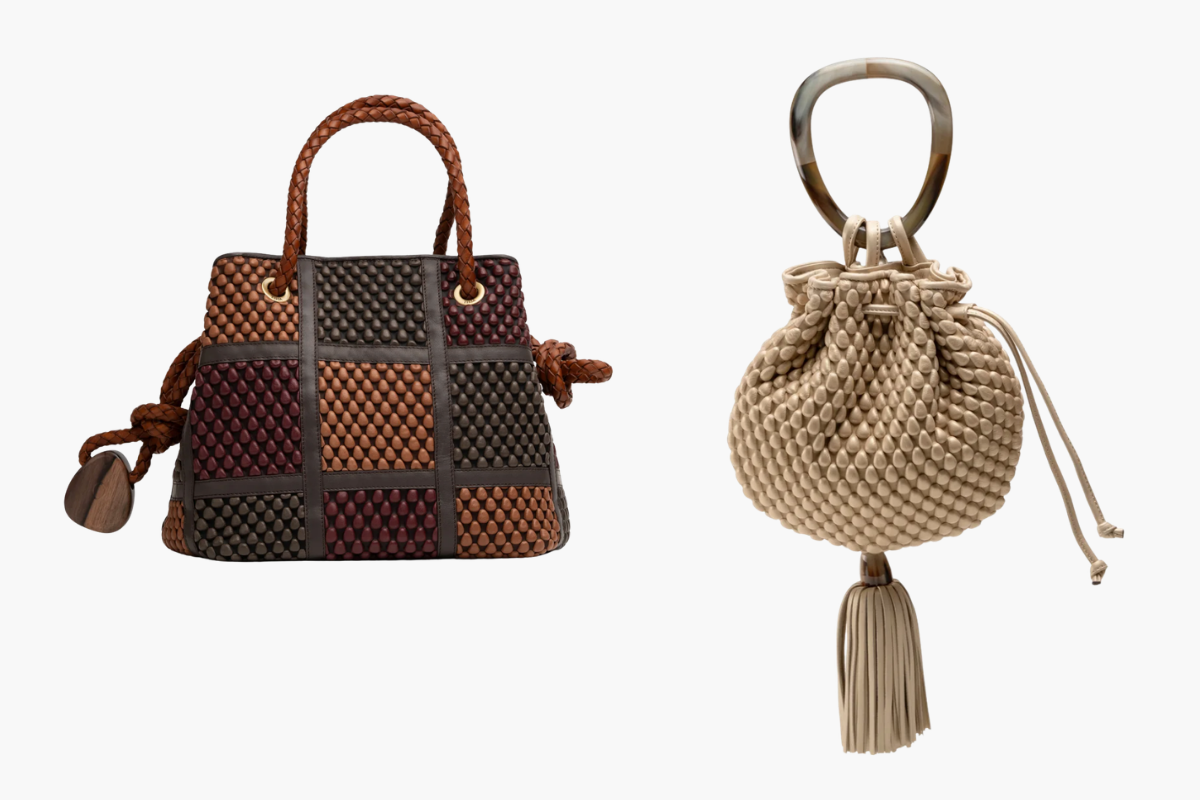
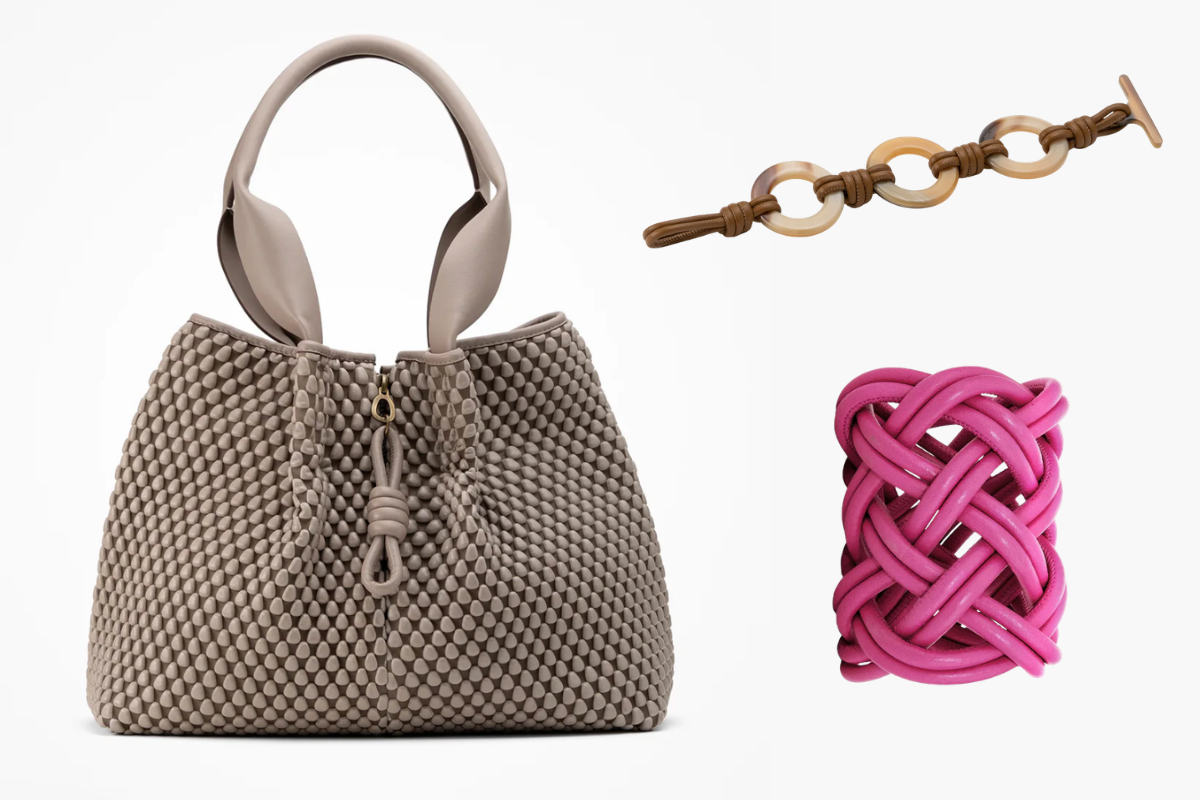
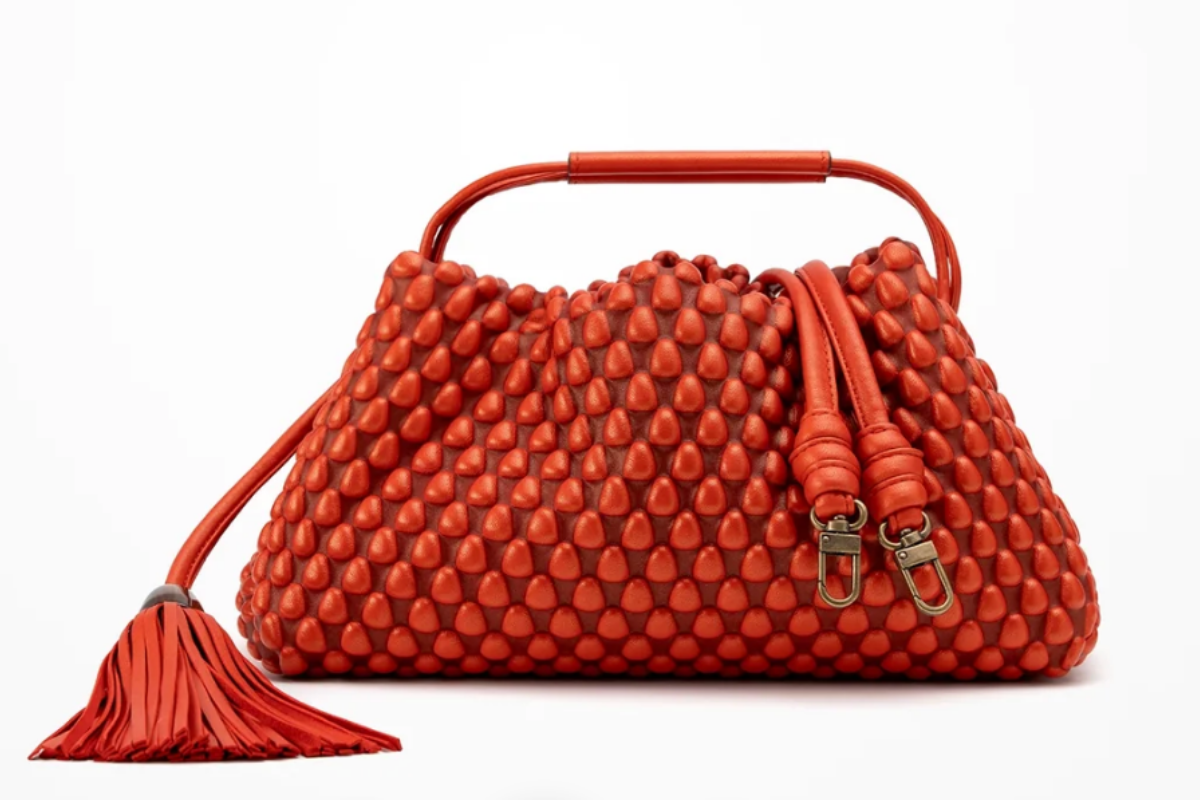
To understand why Fontaneda is so protective of her ateliers in Ubrique, it helps to understand the material. Her signature leather is coloured first, then finished with a process she describes as a bubble, created with steam. The steam reacts differently to every colour, which means the surface cannot be standardised in the way an industrial process would demand.
"It is very complicated to produce," she says, "and that is why it is also so expensive. And the manufacturer, I am fighting for them, because even for a factory it is hard."
"How does that make you feel, when you have such a signature process that is so difficult?" The question is rhetorical, but it has full effect on Tissa. Her answer is that the difficulty is the value. The same factory, she notes, works for some of the most demanding houses in fashion, and the people who work there know what they are doing. "They suffer doing it, which is why they charge so much for this leather. But in some way they are also proud to be able to do such a thing."
Copying the look would be simple. Copying the result would not, and she believes that protects the work. "No one would consider this something worth copying," she says, with a laugh. "The guys with the spreadsheets would come in and say, forget about it. This is not one to copy."
"Our prices are not a marketing tool. They are really what they are."
Fontaneda's understanding of craft was formed early, in a working environment that was less about brand than about process. She describes beginning her career in accessories in Paris, in a small atelier in Saint-Germain, where she watched a single craftsman make a bag from beginning to end rather than in pieces.
"They did the whole bag," she says. "At the end, when they put it on the table, they were proud. It was like when we talk about art, like painting. They had finished their work, and they were proud of what they had done. This pride in what you do, it is almost art. It is completely art. And this is something I want people to feel when they make my handbags."
That sense of ownership runs through her account of the business. She is also clear that it is the reason she has never found it easy to scale. The joy of making, and the discipline of running a company, pull in different directions. "It is like your left brain and your right brain in competition with each other," she says. "The joyful exploration, the curiosity, the wish to take on difficult creative challenges, and then the question of how you grow a business. Those two things do not always agree."
"The joyful exploration and the wish to take on difficult challenges, and then the question of how you grow a business. Those two things do not always agree."
Her background, which includes a period working as a fashion director and a childhood spent travelling to Italy, gives her a broader view of how women dress than most accessory designers bring to their work. She describes family holidays in a beautiful hotel, where the Italian women who came down to dinner at night had a particular way of dressing. "There was no stylist dressing them," she remembers. "They had maybe a Fendi dress, and they combined it with a little necklace they had bought on a trip in Africa, or a little handbag from the market. They were so creative on themselves. There was a personality created by each woman in the way she dressed. And that is lost today."
Fontaneda's company has been in operation for about fifteen years, and for most of that time she has resisted the outside investment that might have accelerated it. The decision has a cost, and she describes it without self-pity.
"A Swiss banker said to me, I cannot understand how you are not bigger, with such an extraordinary product," she says. "And I said to him, independence has a price. I have fought for my independence."
The search for capital, she explains, is not simply a matter of finding money. It is a matter of finding people who will share the vision. "It is so hard to find the right investment, because the people have to enter into my passion. They have to feel what we want to do here, and not only think about money. A private equity firm would not be interested, because they want results very quickly. This is a long-term project."
She is not dismissive of money, after all money is energy for a business to grow and develop. She is only puzzling with the idea that beauty and profit cannot coexist, and she thinks the capital is already out there. "There is so much money in this world right now. Why don't we invest in things that have a message, that are pure beauty? Of course you earn money with it. You simply earn it in a different way."
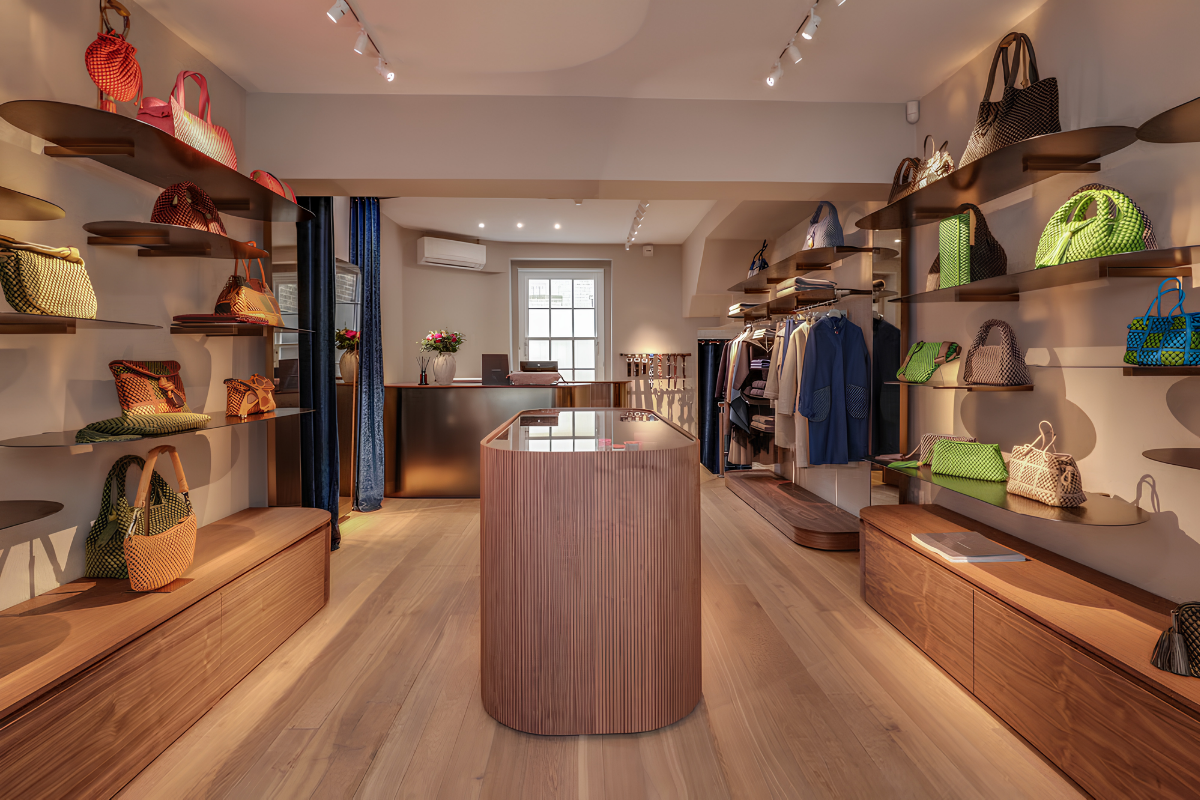
For now the strategy is physical presence. The company has two stores, one in London and one in Madrid, and the Madrid store is performing especially well. Fontaneda sees retail as the place where the brand can speak for itself, and she is careful about the partners she chooses beyond it. "We can create our universe, with beautiful places," she says. "And then there are wholesale partners and boutiques that understand what we are doing, and that communicate to clients what we want to do here. That is essential."
She knows the road is steep. "It is a very, very tough road that I have entered," she says. "I just need people who understand what I am doing. And I think there are more and more of them."
"This is not a mass product. That is what is so beautiful about it."
If the business is hard, the customer is what makes it bearable. Fontaneda is precise about who she is designing for, and who she is not.
"The woman who buys that bag doesn't have to represent anything," she says. "She knows who she is. She knows what she represents. She buys it because she loves it, and because she wants to look beautiful in it. She doesn't wear it because she has to tell people something about herself, money-wise or economically. She falls in love. And funnily enough, she is signalling to other people, the ones who know, who understand what it is. Then you don't need to explain it."
She speaks with obvious pride about the women she sees carrying her bags on the street. "They are always very elegant. They are professionals. They are completely independent, and they have a strong personality. They are independent thinkers. The idea is, you are not going to take over my mind and tell me what I should be. This represents that I understand craft, and I know who I am."
Persuading a customer who already owns a respected name is never simple. Fontaneda recounts an encounter with an Austrian client, a very elegant woman carrying an expensive bag from another house. "She looked at the bags and said, this is interesting. But Mrs Fontaneda, why should I leave my Chanel bag and wear yours?" The explanation, Fontaneda says, was the story behind the making, and the woman fell in love. "It is not that you put away one brand for another. It is a different perspective."
Colour sits at the centre of that perspective. "I really insist on colours," she says. "Colours are very important in Tissa Fontaneda. So why can red not be the new black? I don't believe in rules when it comes to fashion. Why can you not wear a red handbag with a blue outfit? I am a very classic person when it comes to dressing, but I would perfectly well wear a red handbag."
She is equally clear that the bags should belong to the people who buy them. "Every single style I do has a sense," she says. "Each bag has a story. And no bag I design is one that I would not wear myself. That is probably the most important thing for people to know."
Fontaneda is aware that "craft" has become a word that is almost impossible to use without irony. Social media is full of videos showing bags being sewn and cut, and she is impatient with them. "It is so cliché right now. I cannot see it anymore. When I talk with journalists about it, sometimes I don't even want to talk about it, because I think, oh God, what am I telling them? Everybody is telling the same thing, whether it is true or not."
What she is more certain of is the standard she applies to her own products. "What is important for me is that clients know I stand behind my product," she says. "It is a personal project of mine. I vouch for it."
Most of Fontaneda's bags are soft, and she values the way they change over time. "A Tissa bag, you wear it, and the leather changes so much with time that it completely adapts to the way you travel and live," she says. "That is the point of it."
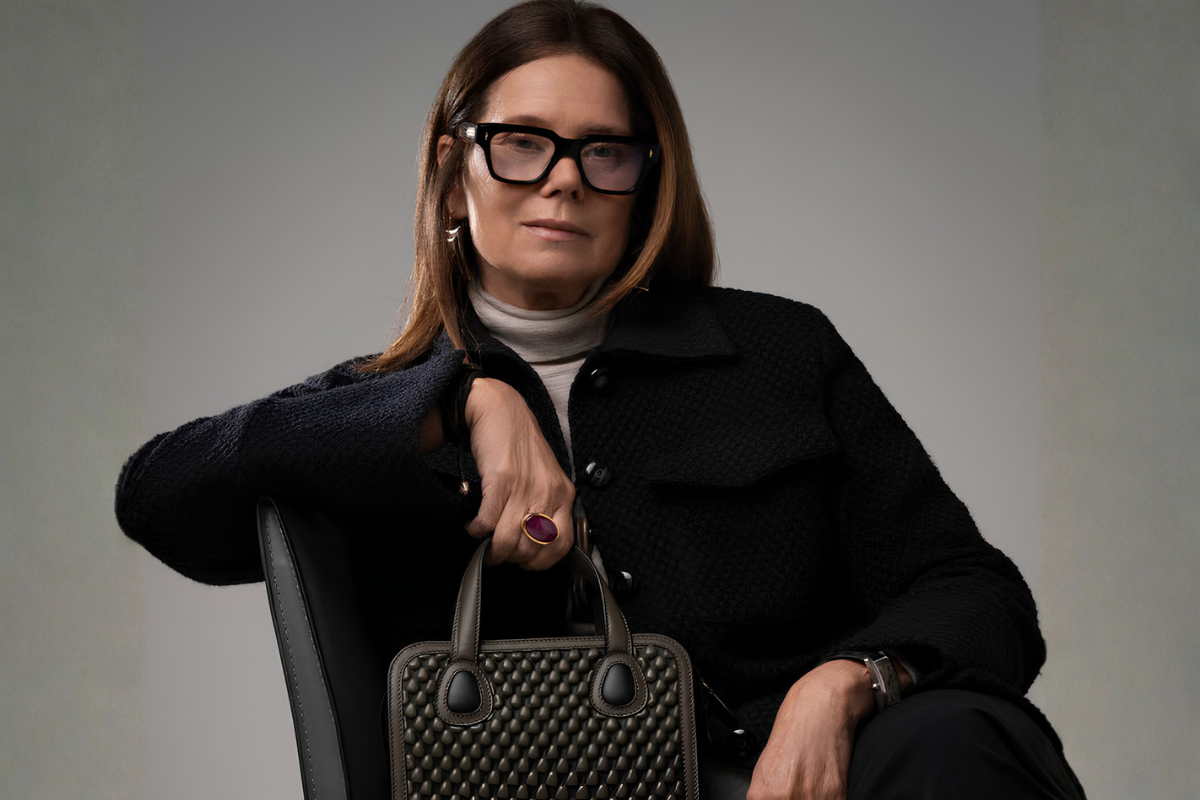
The exception she shows me is the Olympia, which is not yet in the collection. It is structured rather than soft, and it is moulded over wood. "It is very unusual, because it is not soft," she says. "I like to explore different ways to make handbags. I don't want to repeat myself. I love new things. This is a completely different style from what I do here, and that is interesting."
It is a useful reminder that Fontaneda's approach is less a signature look than a set of principles: the material should be honest, the process should be visible in the object, and the designer should be willing to be surprised by her own work.
Asked about the future, Fontaneda speaks less about growth than about boundaries. She wants to build what she calls a small universe, and she is determined that it should not be diluted.
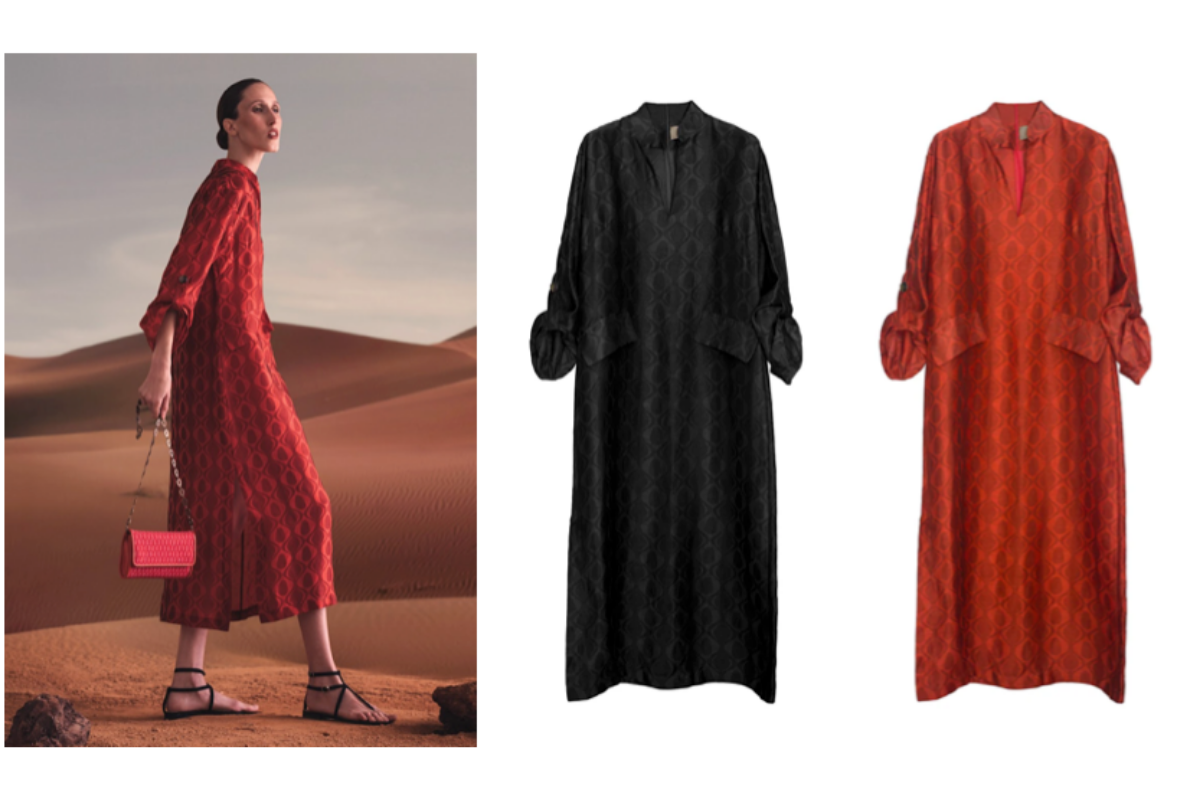
"I don't want massification for this brand at all," she says. "I want to expand, but in a very concrete way. I would love to have more boutiques. I would also love to do more ready-to-wear. I started with ready-to-wear, but I have learned that I want to do more special things, a few very important core pieces, that are exposed in our shops."
She also has a view on what European luxury should represent. "Europe is going to be a tourism hub now anyway, so people come to visit. What do we have in Europe? We have culture. We have tradition. But the money and the power are elsewhere. So I want this to be part of European culture, of our European tradition, and then expand it to the Middle East and to North America. But in a very nice way."
Growth, in other words, is conditional. It must come with the same care that has defined the business so far, and it must not compromise the relationships with the ateliers that make the work possible.
The reflection on craft comes back to the same point. Fontaneda believes that the next phase of the conversation about making is not about praising the hand, but about training it, paying for it and building a life around it. "Where we are now, it is time to open up those conversations," she says. "If we are getting time back, that gives us time to think about how we want to create the future. It starts with sharing ideas and talking."
At the end of our conversation, I ask Fontaneda to describe the woman who wears a Tissa bag in three words. She does not hesitate.
"Independent. Refined. Elegant." She smiles. "Who wouldn't want to be that?"
It is an answer that describes the customer, but it also describes the designer, and the choices she has made in building a company that refuses the easy path. Fontaneda is not interested in being the largest name in the room. She is interested in being the one that people understand, and in keeping the hands that make her work in business. In an industry increasingly organised around speed and scale, that is a deliberate act of resistance, and she knows it.
"It needs a lot of courage to just believe in yourself as a woman, and to put together things that you personally like."